For the person grieving
After your wife dies, the ordinary parts are often the hardest
Losing your wife changes the home you shared, the way decisions get made and the person you told the unimportant things to.
After your wife dies, people may ask whether you are keeping busy. It is an easy question to answer. You can talk about work, the yard or the jobs that need doing without telling anyone what the house sounds like at night.
The ordinary parts are often harder to describe. Her side of a conversation is missing. A decision that used to take thirty seconds now sits around all day because it was never yours alone.
Why does the house feel wrong?
The house feels wrong because it was arranged around two people.
You may notice her absence in places that sound too small to mention. The grocery list has her handwriting on it. A chair stays pushed in. You keep buying something only she ate, or stop buying it and feel bad when you see the empty space.
There is no correct moment to move her things. You might clear a drawer because you need socks and leave a coat untouched for a year. You may want the whole house changed, then hate the first change you make. These decisions belong to you now, which does not make them easy.
Practical problems can make the house feel even stranger. Perhaps she handled the bills, remembered birthdays, or knew which relative needed calling. Maybe you divided those jobs differently. Either way, part of losing a spouse is discovering how much of daily life lived in the other person’s head.
Ask for help with the actual task when you need it. A friend can sit with you while you sort mail. Someone can make the phone call that has been on your list for a week. Help does not have to begin with a long conversation.
What if my grief does not look the way people expect?
Some people want to talk about their wife all day. Others can only manage ten minutes before they need to do something with their hands. You may tell the same story every time you see a friend, or keep the important parts entirely private.
Other people often mistake quiet for coping. They may decide you are doing well because you returned to work or answered a text. Those things show that you returned to work and answered a text. They do not tell anybody what the evening was like.
It can help to give people something concrete. Ask them to come for coffee at a particular time. Tell them you want company while you fix the fence, and that you do not want to discuss how you are doing. A person who cares about you may be relieved to know the terms. They have probably been guessing from a distance and getting it wrong.
You can change those terms another day. Wanting company on Friday does not commit you to company on Sunday. The people worth keeping will learn that an invitation is useful even when you say no.
You also do not owe anyone a cleaner version of your marriage. Your wife was a whole person. The two of you may have been close, angry, tired, funny and lost with each other at different points. Her death did not remove any of that from the years you shared.
Where do the things I still want to tell her go?
The things you still want to tell her can stay somewhere private.
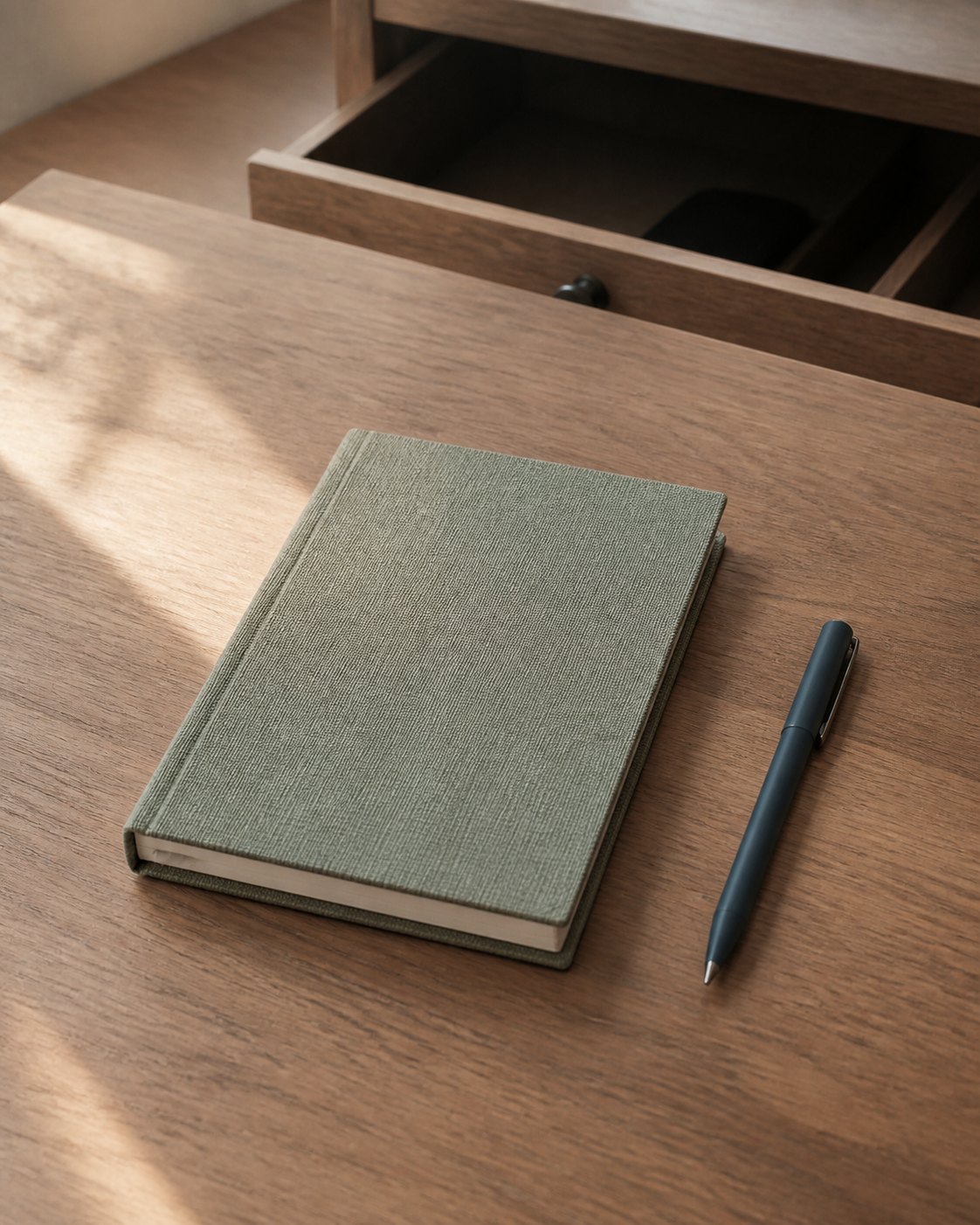
You could keep a notebook in a drawer and use it when a sentence turns up. Write the question you cannot ask her. Record the small piece of news she would have cared about. If all you have is her name and a few words, that is enough for the day.
Some people prefer a little help getting started. You Would Have Loved This: A Grief Journal for Your Wife has prompts about the home, the paperwork, the calendar and the parts of a marriage that were never simple. It has no order and does not expect every page to be used.
The point is to keep a place where you do not have to translate the marriage for anybody else. Write the sentence as you would have said it to her. Stop when the sentence is finished.
Quick answers
- Why does the house feel so different after my wife died?
- A shared home is full of routines that belonged to both of you. The quiet, unfinished tasks and small decisions can make her absence visible all day, even when nothing important is happening.
- Do I have to talk about losing my wife?
- No. Some people want company and conversation. Others prefer a walk, a practical job or time alone. You can choose what helps without performing grief in the way other people expect.
- How do I start writing about my wife?
- Pick one ordinary detail. Write how she took her coffee, what she always noticed first when she entered a room, or the last small thing you wanted to tell her. A whole account of the marriage is not required.