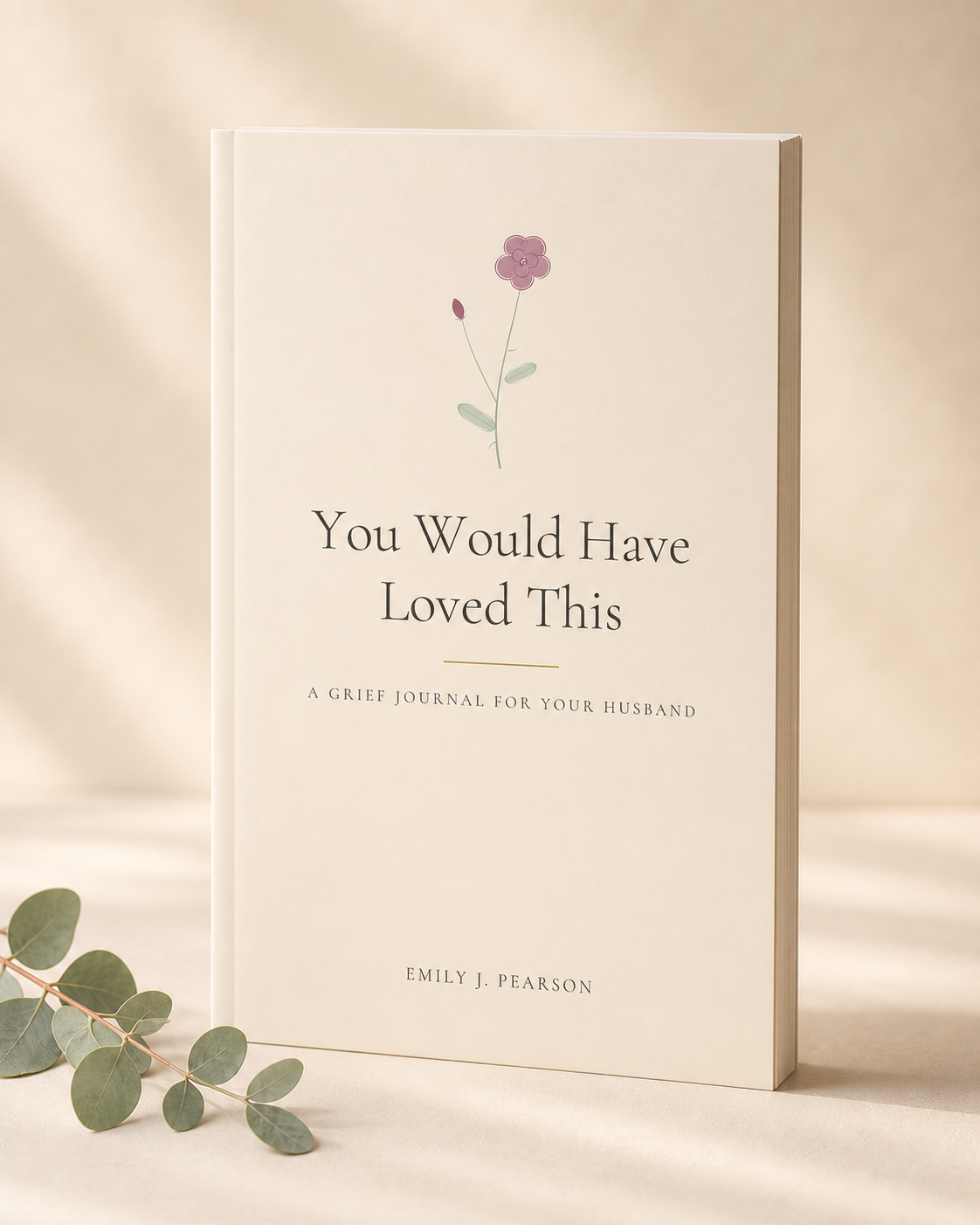
For the things you still turn to tell him.
You Would Have Loved This: A Grief Journal for Your Husband by Emily J. Pearson
You may want to write about your husband without explaining the whole marriage first. These pages ask about how you met, the routines you shared and what has changed since he died. There is room for the memories you enjoy and the things that were difficult.
123 prompts across 10 sections. No order to follow. No timeline to keep.
You don't need the right words
This gives them somewhere to put their own. It can arrive now and wait until they want it. Nothing inside asks them to begin straight away.
Some days a page, some days a line
Both count. The prompts ask very little on purpose, and none of them expect you to be doing well.
Who this version is for
This edition is for a woman remembering her husband. It does not assume a long or straightforward marriage. A second marriage counts, and there is no minimum length.
A few prompts from inside
- How did the two of you meet? Tell it the way you would tell it to a stranger sitting next to you.
- Which habit of his got on your nerves, and how do you remember it now?
How it differs from the other journals
It shares the same 10-section structure and 123-prompt framework as the wife and partner editions. The relationship language and pronouns are written for a husband.
A look inside, so you know what you're choosing
Giving it as a sympathy gift
- Is it too soon, or too late?
- There's no wrong time. The first pages say it can be put away. It works handed over now, and it works quietly left on a doorstep months later.
- What do I write in the card?
- A short note is enough. "I saw this and thought of you. There's no need to open it now" says what it needs to say.
- How does it arrive?
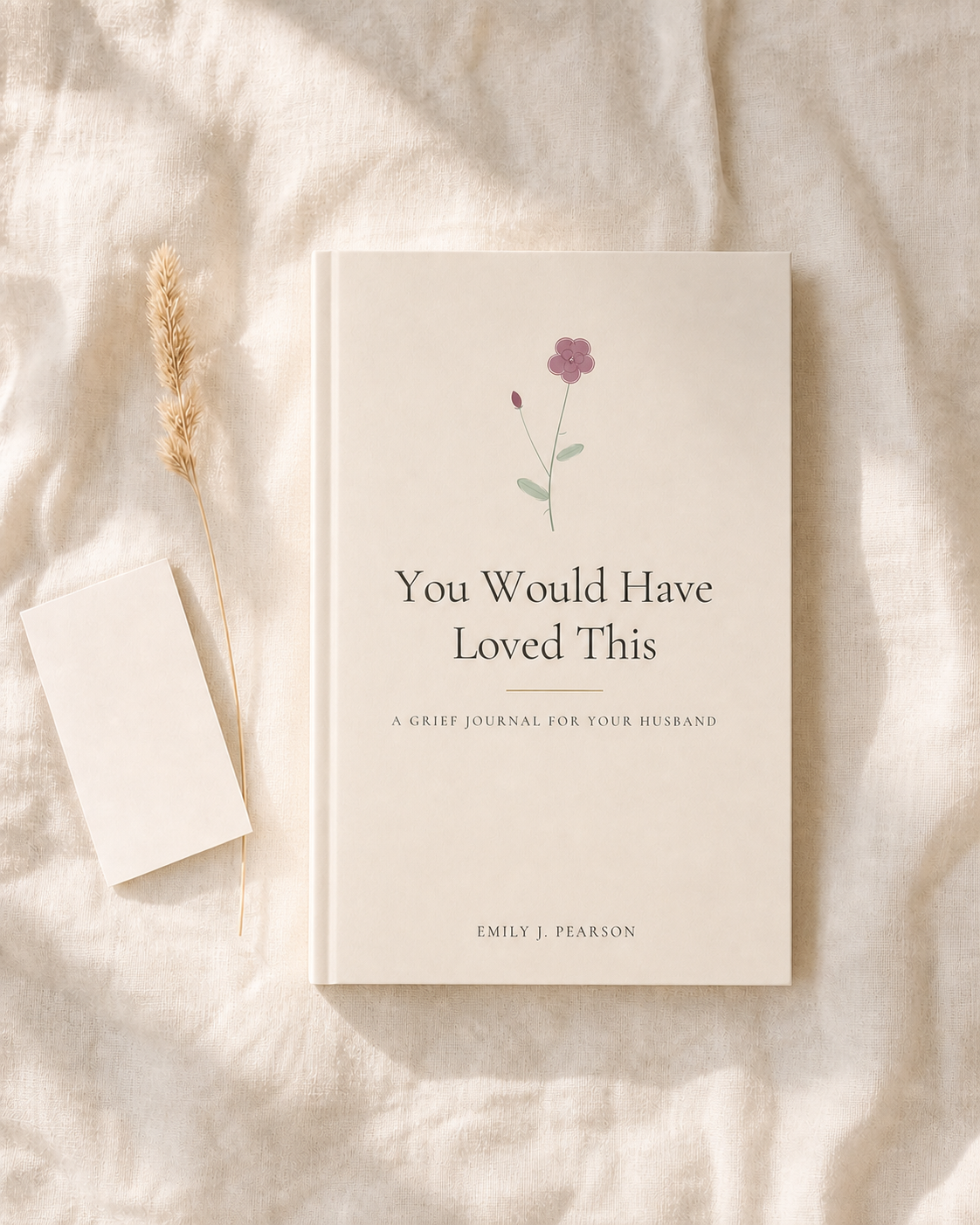
- A 6×9-inch matte paperback on cream paper. It ships from Amazon like anything else you order.
Why it's built this way
Losing a spouse or partner changes the ordinary parts of the day as well as the large ones. These prompts begin with how you met and the private history only the two of you knew. They also make room for the house without him, the paperwork, the dates on the calendar and the parts of the relationship that were never simple.
There are no stages to pass and no daily boxes to keep up with. You can start anywhere, cross out what does not fit and leave any page empty.
The details
Questions people ask
- Do I have to think of myself as a widow to use it?
- No. The book makes room for how you feel about that word, what to do with your ring and how to answer questions about your marriage. You can use his name and skip any prompt that does not fit.
- Is this a journal for widows?
- It is written for a woman remembering her husband. The cover says husband rather than widow because the relationship is the point.
- Does it assume the marriage was happy or straightforward?
- No. One section is for what was not simple, including anger, unfinished arguments and the parts that had no place at the funeral.
- Does she have to use it in order?
- No. The sections are groupings rather than steps. She can start anywhere, cross out what does not fit and leave any page empty.
- Is it religious?
- No. The journal does not assume a faith and does not rule one out.
- Can I send it as a gift?
- Yes. It is often chosen as a sympathy gift after the loss of a husband. It can wait on a shelf until she wants it.
As an Amazon Associate we earn from qualifying purchases. Emily J. Pearson is the author of this journal, and we say so plainly.